
Yawm Al Ibda'a 2025–26 SNEC National Innovation & Creativity Competition
Empowering Students Through Creativity, Innovation and Meaningful Contributions to Society.
About
Yawm Al Ibda'a is SNEC's flagship innovation and creativity initiative that provides students with opportunities to present original ideas, research, technological solutions, social innovations, and creative projects that benefit religion, society, and the nation. The program encourages critical thinking, problem-solving, innovation, teamwork, and leadership among students.
Featured Innovations
A glimpse into the groundbreaking projects addressing real-world challenges across multiple disciplines.
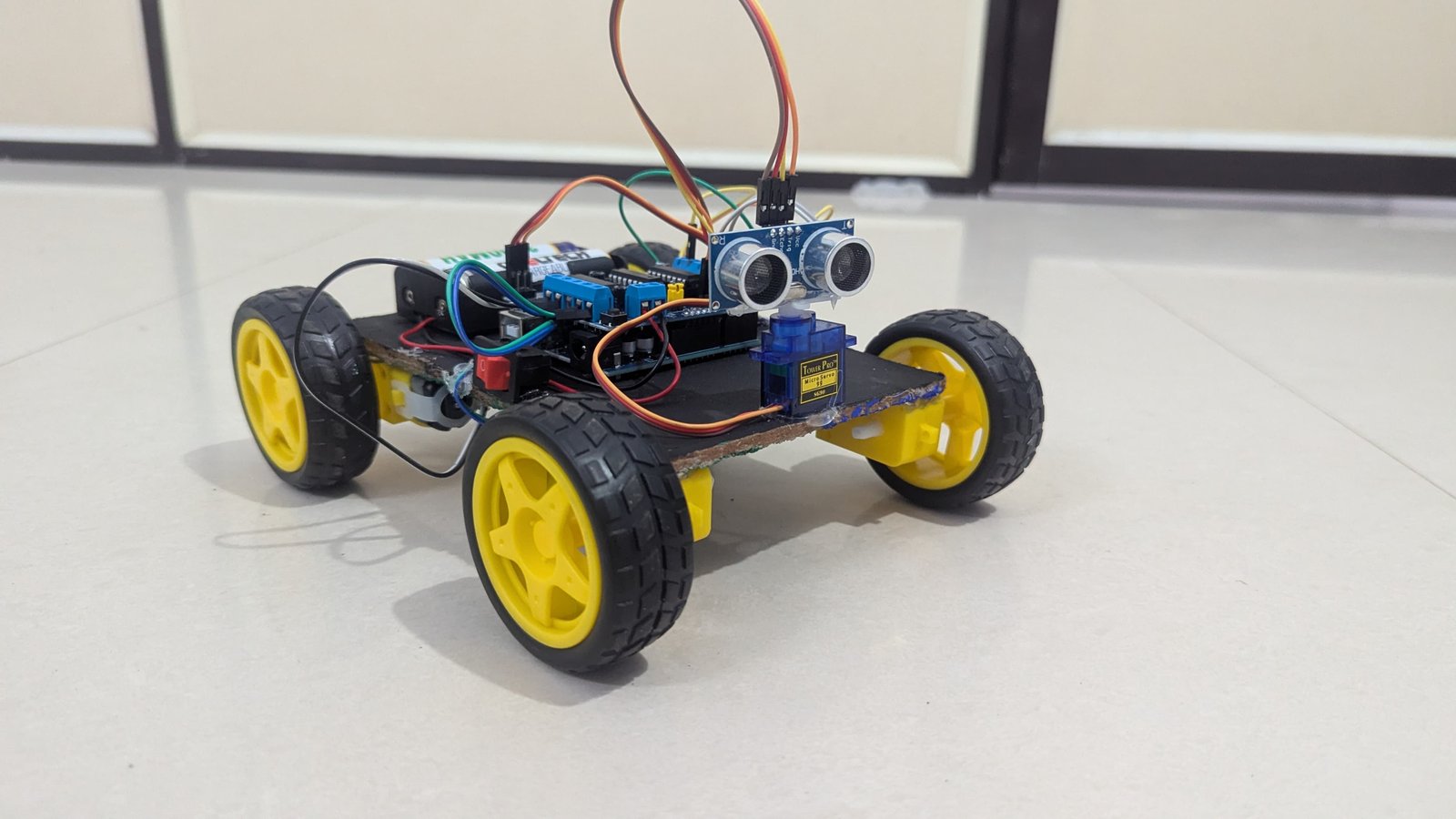
Roborider Robotics Car
The Multi-Functional Smart Robotic Car Using Arduino is an intelligent robotics project that combines three advanced control methods into a single vehicle: Obstacle Avoidance, Bluetooth Control, and Voice Control. Built using an Arduino microcontroller, ultrasonic sensor, Bluetooth module, motor driver, and DC motors, the car can operate both autonomously and under user control. In Obstacle Avoidance Mode, the ultrasonic sensor continuously measures the distance to objects ahead. When an obstacle is detected within a predefined range, the Arduino automatically stops the car or changes its direction, allowing it to navigate safely without human intervention. In Bluetooth Control Mode, users can manually control the car through a smartphone application. Commands such as forward, backward, left, right, and stop are transmitted via the Bluetooth module (HC-05/HC-06), enabling wireless operation. In Voice Control Mode, the car responds to spoken commands received through a mobile application connected via Bluetooth. The Arduino interprets these commands and controls the motors accordingly, providing a hands-free and interactive driving experience. Objectives To develop a smart robotic vehicle with multiple control methods. To understand the practical applications of Arduino programming, sensors, and wireless communication. To enhance knowledge of robotics, automation, and embedded systems. Problem Addressed The project demonstrates how intelligent robotic vehicles can reduce human effort by navigating obstacles automatically while also offering convenient wireless and voice-based control. It serves as an educational model for smart transportation and automation technologies. Innovative Features Integrates three operating modes in one robotic car. Seamless switching between autonomous, Bluetooth, and voice-controlled operation. Combines sensor-based automation with wireless communication for enhanced flexibility. Educational and Social Impact This project provides hands-on experience in robotics, automation, embedded systems, IoT concepts, and programming. It helps students understand real-world applications of smart technology and can inspire innovations in autonomous vehicles, assistive robotics, and intelligent transportation systems. Technologies and Components Used Arduino Uno Ultrasonic Sensor (HC-SR04) Bluetooth Module (HC-05/HC-06) Motor Driver (L298N) DC Motors and Wheels Chassis Battery Pack Arduino IDE Smartphone with Bluetooth Voice Control Application This project is an excellent educational prototype that demonstrates how a single Arduino-based system can combine autonomous navigation, wireless mobile control, and voice recognition to create a versatile and intelligent robotic vehicle.
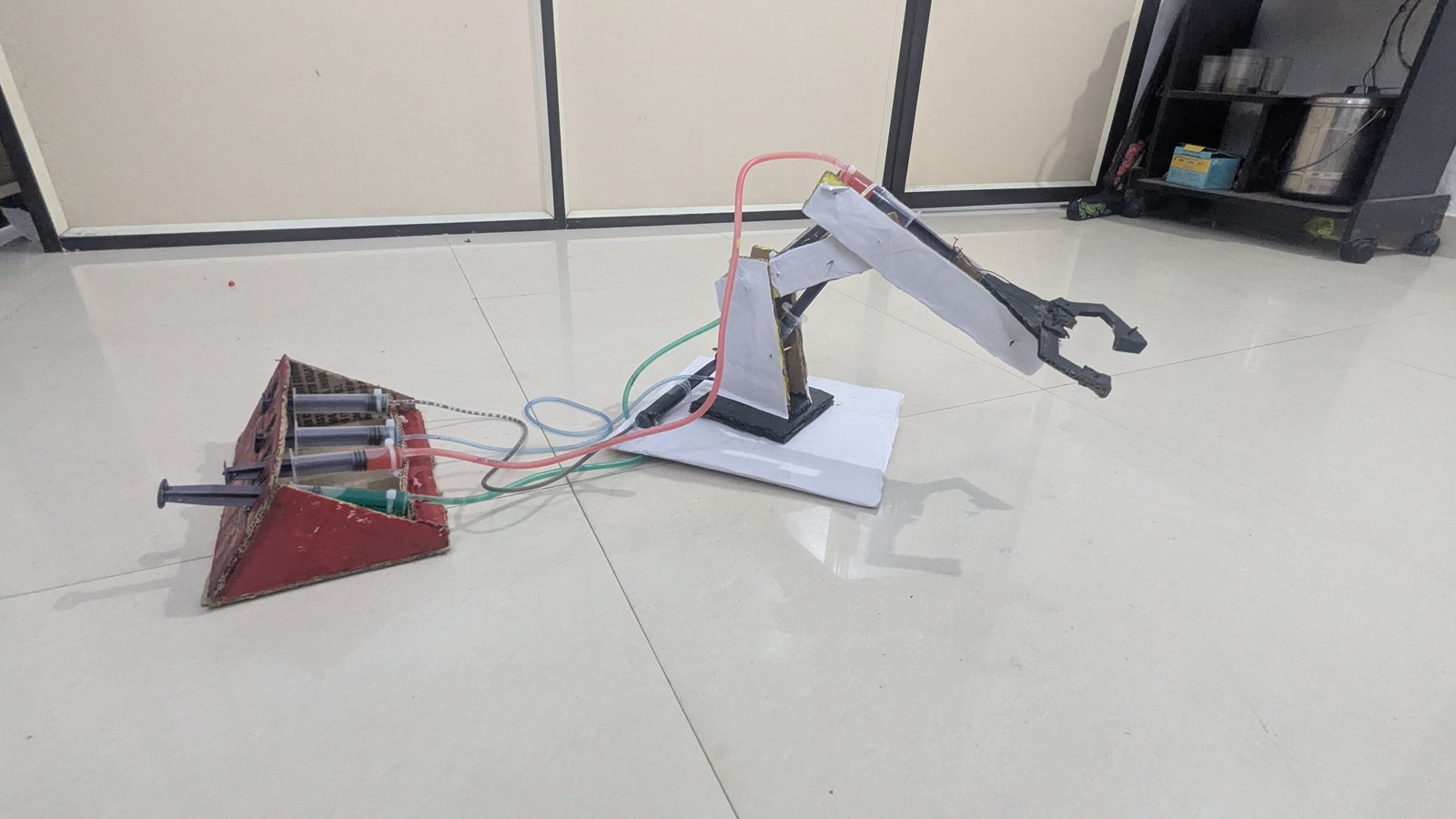
Hydraulic Robotics Arm
The Hydraulic Mini Crane is a working model that demonstrates the principles of hydraulic pressure and Pascal’s Law. It is designed to lift and move small objects using water pressure instead of electrical power or motors. The crane consists of syringes connected by plastic tubes filled with water. When pressure is applied by pushing or pulling one syringe, the water transmits the force through the tube to another syringe, causing the crane arm to move. This hydraulic mechanism enables the crane to lift, lower, and reposition lightweight objects smoothly and efficiently. Objectives To understand Pascal’s Law and the concept of hydraulic pressure. To learn how hydraulic systems are used to multiply force in real-life machines. To develop practical skills in designing and building simple mechanical systems. Problem Addressed The project demonstrates how hydraulic systems can make lifting and moving objects easier by reducing the amount of manual effort required. It provides a simple model of the technology used in construction equipment, cranes, excavators, and other heavy machinery. Innovative Features Uses an eco-friendly hydraulic mechanism powered by water. Demonstrates force transmission without electricity or motors. Provides a low-cost and effective educational model for learning hydraulic engineering concepts. Educational and Social Impact This project helps students understand fundamental concepts of physics, engineering, and mechanics through hands-on experimentation. It encourages creativity, problem-solving, and innovation while illustrating how hydraulic technology improves efficiency in construction, manufacturing, and material handling. Materials Used Syringes Plastic Tubes Water Cardboard Iron Wire Adhesive and Basic Craft Materials The Hydraulic Mini Crane is a fully functional educational model that effectively demonstrates the practical application of Pascal’s Law and hydraulic pressure, making complex engineering concepts easy to understand through an interactive and engaging project.
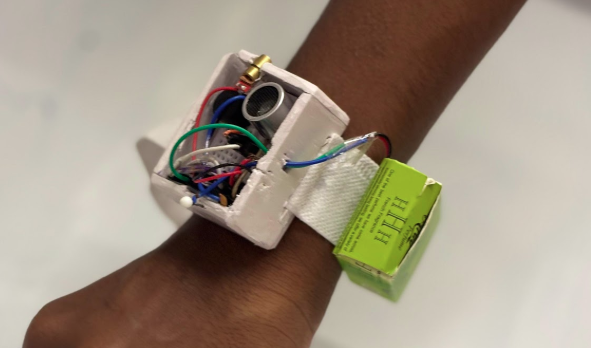
Ultrasonic Sound–Based Dog Repellent Watch
This project is a concept demonstration model of an ultrasonic sound–based dog repellent watch, designed to improve personal safety in public spaces. The idea is to use ultrasonic sound, which is inaudible to humans, to discourage stray dogs without causing them any physical harm. The device is intended to be worn like a watch and can be activated when needed. When switched on, it emits high-frequency ultrasonic sound through an ultrasonic transmitter. While humans cannot hear this sound, dogs and other animals are more sensitive to such frequencies and may feel discomfort, causing them to move away. This model focuses on explaining the working principle and idea of an ultrasonic dog repellent rather than delivering high output power. It demonstrates how wearable technology and basic electronics can be combined to address a real-world safety problem in a humane way.
Overall Champions (Stream Based)
Celebrating the highest echelons of innovation across all disciplines.
SHARI'A Plus
SHE
SHARI'A
Judges & Expert Panel
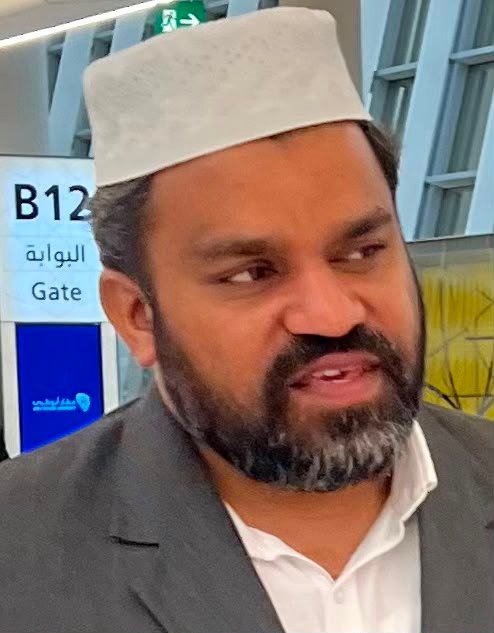
Dr. JABIR KT
Associate Professor & Research Guide
Research Department of Arabic, TM Govt. College, Tirur, Malappuram, Kerala

Dr.ABDUL KAREEM T
Assistant Professor of Physics
PSMO College , Tirurangadi Malappuram, Kerala

Abdul Hakeem Faizy
Administrator
Samastha E-Learning

Dr.E.K Simil Rahman
Physics teacher in India & Qatar
"Yawm Al Ibda'a helped me transform my idea into a real project."
"An excellent platform for encouraging innovation and creativity."
"The quality of projects was truly inspiring."
Yawm Al Ibda'a 2026–27
Continue the journey of innovation and creativity.
Participate Next Year rocket_launch