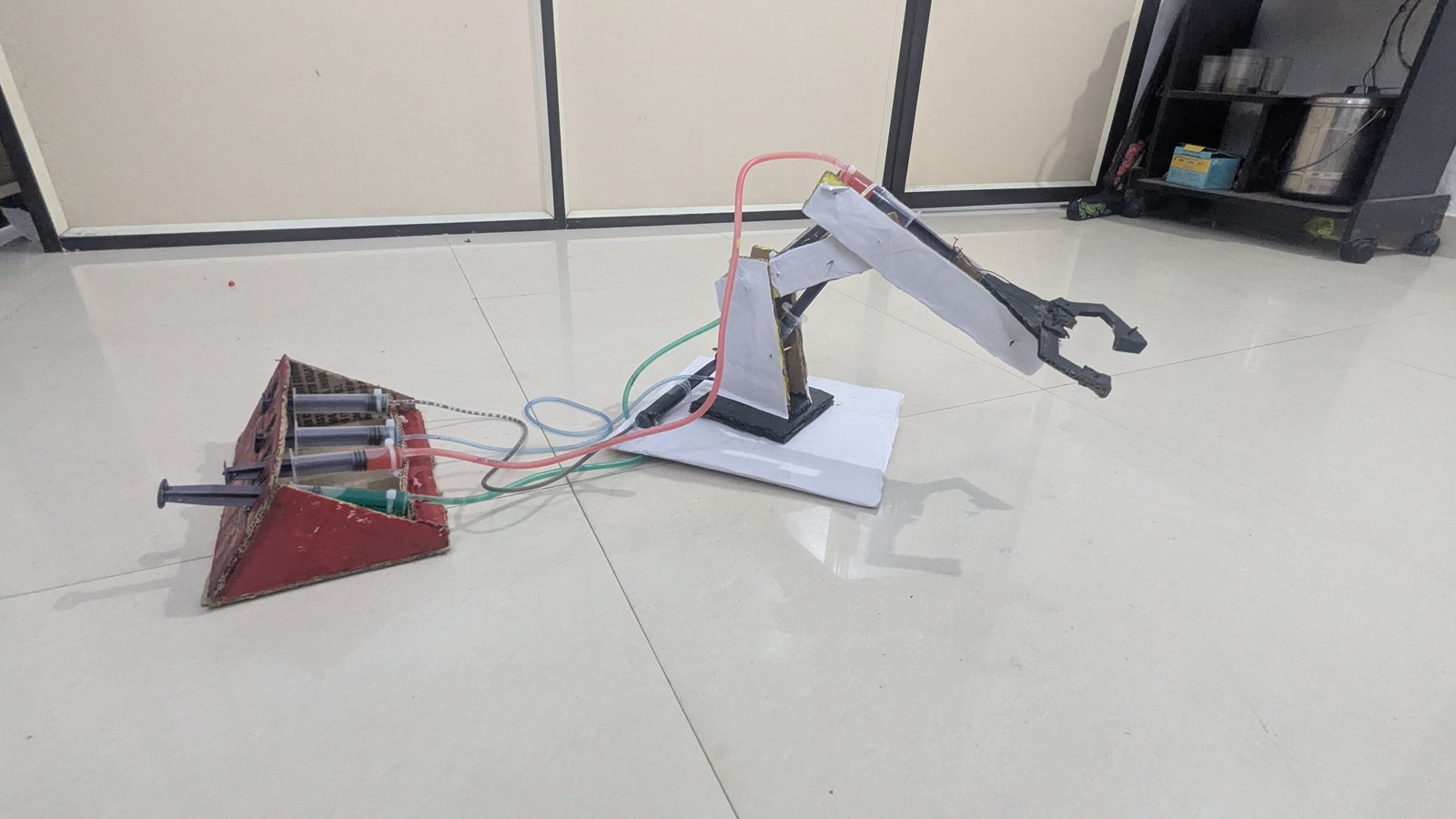
Hydraulic Robotics Arm
The Hydraulic Mini Crane is a working model that demonstrates the principles of hydraulic pressure and Pascal’s Law. It is designed to lift and move small objects using water pressure instead of electrical power or motors. The crane consists of syringes connected by plastic tubes filled with water. When pressure is applied by pushing or pulling one syringe, the water transmits the force through the tube to another syringe, causing the crane arm to move. This hydraulic mechanism enables the crane to lift, lower, and reposition lightweight objects smoothly and efficiently. Objectives To understand Pascal’s Law and the concept of hydraulic pressure. To learn how hydraulic systems are used to multiply force in real-life machines. To develop practical skills in designing and building simple mechanical systems. Problem Addressed The project demonstrates how hydraulic systems can make lifting and moving objects easier by reducing the amount of manual effort required. It provides a simple model of the technology used in construction equipment, cranes, excavators, and other heavy machinery. Innovative Features Uses an eco-friendly hydraulic mechanism powered by water. Demonstrates force transmission without electricity or motors. Provides a low-cost and effective educational model for learning hydraulic engineering concepts. Educational and Social Impact This project helps students understand fundamental concepts of physics, engineering, and mechanics through hands-on experimentation. It encourages creativity, problem-solving, and innovation while illustrating how hydraulic technology improves efficiency in construction, manufacturing, and material handling. Materials Used Syringes Plastic Tubes Water Cardboard Iron Wire Adhesive and Basic Craft Materials The Hydraulic Mini Crane is a fully functional educational model that effectively demonstrates the practical application of Pascal’s Law and hydraulic pressure, making complex engineering concepts easy to understand through an interactive and engaging project.